



Authored by Dr. Susan E. Brown, PhD
Being told you need a bone drug can feel unsettling — and understandably so. If your doctor believes your bone health is serious enough to require medication, that’s an important signal.
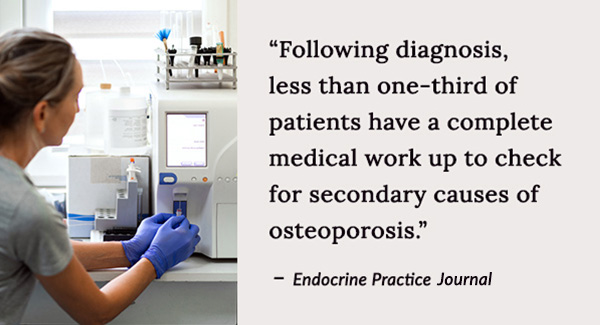
But before starting treatment, there’s one essential step that often gets overlooked:
Understanding why bone loss is happening in the first place.
Bone loss has causes — and many are treatable
Your bones are living tissue, constantly being broken down and rebuilt. When breakdown begins to outpace rebuilding, something is interfering with that balance.
In many women, bone loss is driven by factors such as nutrient deficiencies, hormone imbalances or metabolic stress. These are issues that can often be identified and addressed. Yet far too often, women are prescribed bone drugs without ever being evaluated for these root causes.
That’s a missed opportunity for better, more personalized care.
What a comprehensive osteoporosis workup should include
A proper medical workup looks beyond bone density alone. It evaluates the systems that regulate calcium balance, bone turnover and hormonal signaling.
Important tests often include:
Vitamin D status
Vitamin D is essential for calcium absorption and bone strength and deficiency is extremely common.
Urinary calcium loss
Some women lose too much calcium through the kidneys, even when intake appears adequate.
Parathyroid hormone (PTH) levels
Elevated PTH can quietly pull calcium from bones, weakening them over time.
Cortisol levels
Chronic stress and high cortisol accelerate bone breakdown and inhibit repair.
DHEA levels
Low DHEA is associated with reduced bone formation, particularly with aging.
Bone turnover markers
These tests reveal how quickly bone is being lost right now, offering insights that bone density scans alone cannot provide.
These tests are widely available — yet many women are never offered them. I often hear from women who were prescribed bone drugs without any meaningful testing. Only later do they discover issues such as low Vitamin D status or a parathyroid issue.
These conditions don’t just affect bone density — they affect overall metabolic and hormonal health. In many cases, addressing them early could have changed the treatment path entirely.
This doesn’t mean bone drugs are never appropriate. In some situations, medication may play an important role.
But medication should be part of a thoughtful, informed plan — not the first or only step.
Understanding what’s driving bone loss allows you and your doctor to choose the most effective, individualized approach to protecting your bones long term. See my complete article on testing for bone loss for a list of possible options to discuss with your doctor.