


Authored by Dr. Sarika Arora, MD
GLP-1 isn’t new. It’s a hormone your body makes to regulate appetite, blood sugar and energy balance. Semaglutide, by contrast, is a medication that artificially mimics this hormone — creating the signals your body would normally produce on its own.
While semaglutide medication can be effective (but has side effects), it doesn’t address why your natural GLP-1 system may no longer be working as it should.
That’s where the real story begins.
Why has your own GLP-1 stopped working?
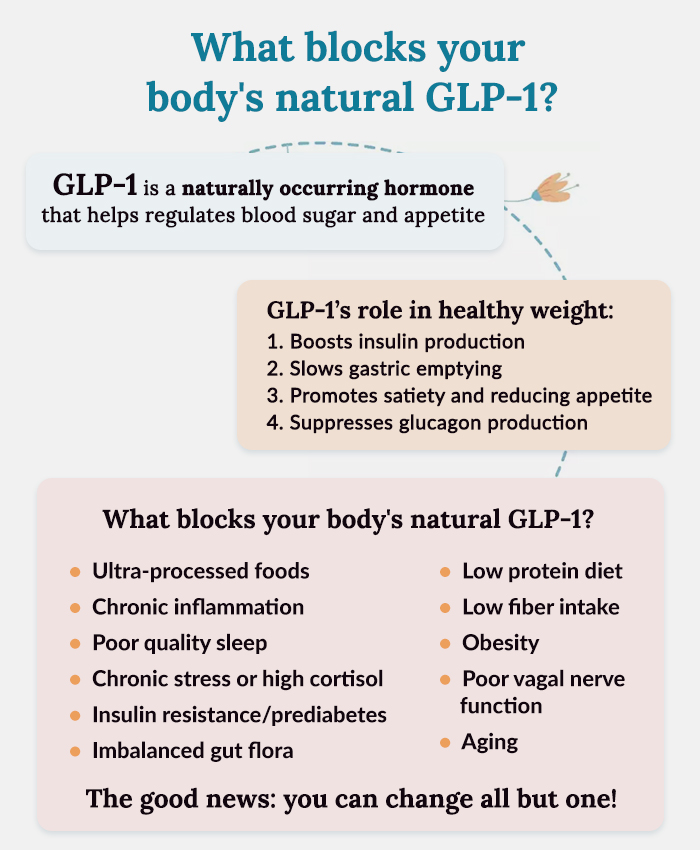
GLP-1 is released in your gut after you eat, acting as a messenger between your digestive system and your brain. Its role is simple but powerful. It helps your body respond appropriately to food by signaling fullness, slowing digestion, and supporting healthy blood sugar balance.
When this system is working well, your body has a natural ability to regulate appetite and energy without much effort. But like many systems in the body, it can become less reliable due to a variety of factors, including age, diet and other lifestyle habits..
What semaglutide does differently
Semaglutide is widely used for weight loss because of its effects on appetite regulation. It works by activating the same receptors as GLP-1, helping to reduce hunger and increase feelings of fullness.
While your body releases GLP-1 in response to meals and clears it relatively quickly, semaglutide remains active in the body for an extended period. Medications like Ozempic and Wegovy use this mechanism to support both blood sugar regulation and weight management.
But here’s what it’s important to know: semaglutide amplifies a pathway. It does not restore the underlying system that controls it. This is why once you stop the medication, all the weight often comes back.
5 ways to support your GLP-1 naturally
Eat more protein and fiber.
Eating more protein and fiber-rich foods is a powerful way to naturally boost GLP-1 activity. Excellent sources include beans, salmon, flax and chia seeds, leafy greens, and other fiber-packed foods. Soluble fiber, in particular, promotes satiety and helps reduce cravings between meals – amplifying its benefits. Foods like black beans, sweet potatoes, broccoli, psyllium husk and sunflower seeds provide this beneficial fiber.
Avoid excess sugar and processed foods (which have excess sugar).
Diets high in added sugars can blunt GLP-1 release over time, disrupting gut hormone signaling and contributing to blood sugar spikes that overwhelm the body’s natural appetite regulation. Excess sugar also fuels inflammation and elevates cortisol levels, both of which interfere with GLP-1’s effectiveness. What to eat instead for enhanced GLP-1 activity: skip the sugary processed foods and aim for mostly whole, nutrient-dense foods that help the body maintain steady blood sugar levels.
Prioritize quality sleep.
Sleep plays a vital role in enhancing the body’s natural GLP-1 activity by creating the optimal hormonal and metabolic environment for it to function. During restful sleep:
- Insulin sensitivity improves
- Inflammation and cortisol levels decline
- Gut hormone rhythms – including GLP-1 – are better regulated
- Appetite hormones like leptin and ghrelin are balanced, making the brain more responsive to GLP-1’s appetite-suppressing effects
In essence, quality sleep amplifies GLP-1’s natural ability to support healthy metabolism, reduce cravings and promote satiety.
Resistance training.
Regular moderate exercise improves GLP-1 sensitivity and overall metabolic health. Resistance training (also known as strength training or weight training) is particularly effective. Aim for 2-5 times per week for 30-45 minutes per session.
Chew slowly and eat mindfully.
GLP-1 release depends on communication between your gut and brain. When you eat too quickly, your body misses the chance to send those fullness signals. Use mealtime as a time to unwind and destress. Slow down, enjoy your food and give your GLP-1 the chance to do its work.
Supplements can help too.
Nutrients that support natural GLP-1 activity include:
- Berberine. Nicknamed “Nature’s Ozempic,” the medicinal plant Berberine helps to improve insulin sensitivity, enhance fat burning and modulate gut microbiota for better metabolic efficiency and cholesterol balance.
- Lycopene. Supports healthy lipid metabolism and assists with reducing visceral belly fat.
- Vitamin C. Helps regulate cortisol and oxidative stress, both of which have major negative impacts on GLP-1 when left unchecked.
- Myo/D-Chiro Inositol. Promotes insulin sensitivity and hormonal balance, which is especially beneficial for women already struggling with blood sugar challenges. Inositol also helps reduce cravings and supports steadier energy levels throughout the day. Our Weight BioType #6 combo contains this exact mix of nutrients.
Can you restore your body’s own GLP-1 system? Fortunately, the science points to a resounding yes. Supporting your body’s natural GLP-1 production isn’t about forcing appetite down. It’s about restoring the signals that help your body regulate itself more effectively.