



Authored by Dr. Mary James, ND
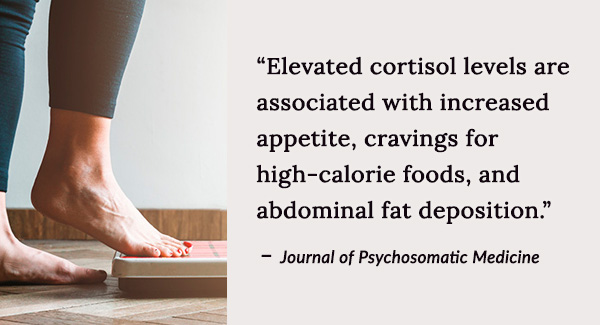
For many women, burnout has become a way of life — juggling constant demands, running on too little sleep and never truly powering down. Over time, this chronic stress keeps cortisol, the body’s main stress hormone, elevated. And when cortisol stays high, it’s closely linked with fatigue, brain fog and stubborn weight gain, especially belly fat.
The good news? You can reset your stress chemistry, recover your energy, feel more focus and let go of stubborn weight. Here are three science-backed tips to beat burnout and feel — and look — like yourself again.
Release stubborn weight by balancing your stress hormones
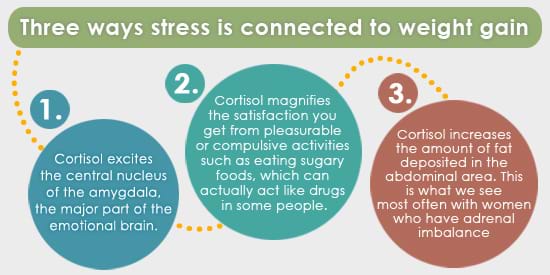
You can ease your body away from holding on to extra weight by supporting your adrenal glands, which are responsible for dealing with stress and releasing cortisol. The best ways to restore the adrenal glands include:
Adjusting your eating habits.
If you see fat as your food enemy, we suggest you take a closer look at your carbohydrate intake. Many women replace fat with alternatives high in simple carbohydrates, which contribute to insulin resistance and weight gain. Try to limit your carbohydrate intake to 16 grams at every meal and 7 grams per snack. Eat foods that support adrenal stress hormone balance.
Finding methods to cultivate calm.
Stress in all forms can contribute to adrenal imbalance. Even things you may not think of, such as being “on the go” all of the time. That’s why it’s so important to make time for yourself and to s-l-o-w d-o-w-n. Try this easy breathing technique that helps calm the nervous system and reset your stress hormone response.
Using phytotherapeutic compounds to calm cortisol overproduction
Excess belly fat is a biological signal that your body has slipped into unhealthy homeostasis, a state in which your internal systems meant to maintain balance – including metabolism, stress response, blood sugar control and hormone signaling – have gone off track and gotten stuck there.
Even when you can’t completely cut excess stress in your life, you can help reduce or reverse its effects on your weight and overall health with hormone-balancing herbal and natural compounds that support the shift back into healthy homeostasis.
We developed our Weight BioType #4 formula exclusively for women in need of repairing the stress-driven health effects of fatigue, burnout and its resulting weight gain. Women who identify with Weight BioType #4 often find themselves in a constant cycle of doing too much and resting too little. They push through exhaustion with caffeine or sugar, wake up tired even after a full night’s sleep, and notice that their weight seems “stuck” no matter what they try. This pattern reflects how long-term stress can leave the adrenal system depleted and cortisol rhythms disrupted, aka burnout.
Supporting this Biotype is about helping the body recover from that overdrive state and reestablishing natural energy balance so that you can shift from survival mode back to a place of steady metabolism and genuine vitality.
Changing how your body responds to stress can make all the difference when you need to lose extra pounds, and we’re here to make it easier for you.
References and further reading
Adam, T., & Epel, E. 2007. Stress, eating, and the reward system. Physiol. Behav., 91(4), 449–458 (accessed 03.04.2009).
Torres, S., & Nowson, C. 2007. Relationship between stress, eating behavior, and obesity. Nutrition, 23 (11–12), 887–894. (accessed 03.04.2009).
Gluck, M. 2006. Stress response and binge eating disorder. Appetite, 46 (1), 26–30. (accessed 03.04.2009).
Gluck, M., et al. 2004. Cortisol stress response is positively correlated with central obesity in obese women with binge eating disorder (BED) before and after cognitive-behavioral treatment. Ann. NY Acad. Sci., 1032, 204–207. (accessed 03.04.2009).
Pasquali, et al. 1998. Pulsatile secretion of ACTH and cortisol in premenopausal women: Effect of obesity and body fat distribution. Clin. Endocrinol. (Oxf.), 48 (5), 603–612. (accessed 03.05.2009).
Dallman, M., et al. 2003. Chronic stress and obesity: A new view of “comfort food.” PNAS, 100 (20), 11696–11701. (accessed 03.02.2009).