



Authored by Dr. Mary James, ND
Many women experiencing symptoms like hot flashes, weight gain, irritability and irregular periods often wonder what’s at the root of these problems. And more often than not, the answer lies in a crucial hormone: progesterone.
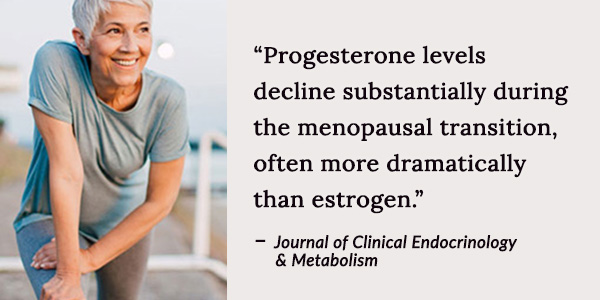
Our bodies have a constant and significant need for progesterone. This vital hormone plays a starring role in everything from managing stress and maintaining hormonal balance to supporting sexual satisfaction and a healthy menstrual cycle. However, during the years leading up to menopause (perimenopause), progesterone production can become inconsistent, resulting in lower levels and imbalanced ratios.
What happens when your progesterone levels are low — and what can you do about it? Dr. Mary James delves into the intricacies of progesterone and reveals what helps to naturally restore your hormonal harmony.
Signs your progesterone may be too low
Progesterone is produced primarily after ovulation. As women move through their 40s (and sometimes earlier), ovulation becomes less consistent. Even when estrogen levels remain normal — or spike unexpectedly — progesterone often drops.
Low progesterone doesn’t look the same for every woman, but common signs include:
- Difficulty falling or staying asleep
- Increased anxiety, irritability or feeling “wired but tired”
- Heavy, irregular or skipped periods
- Breast tenderness or bloating
- Hot flashes or night sweats
- Weight gain around the hips or midsection
- Low libido or reduced sexual satisfaction
- Worsening PMS symptoms
- Feeling less resilient to stress than you used to
Many women are told these symptoms are “just part of aging.” In reality, they’re often signs that progesterone support is missing.
The hidden role of stress and the “progesterone steal”
Your body uses progesterone for more than reproduction. It’s also a key building block for cortisol, your primary stress hormone.
When stress levels are high — whether emotional, physical or environmental — your body diverts progesterone to make cortisol. This is sometimes called the progesterone steal.
The more stress you’re under, the less progesterone remains available for:
- Balancing estrogen
- Supporting sleep and mood
- Maintaining a healthy menstrual cycle
- Supporting sexual arousal and satisfaction
This is why symptoms often worsen during stressful life phases — even if nothing else has changed.
5 steps to support progesterone naturally
If you suspect low progesterone, these steps can help support balance:
Address chronic stress
Even small daily practices — walking, breathwork, consistent sleep — reduce progesterone drain.
Support hormone-building nutrients
Your body needs adequate cholesterol, Vitamin B6, magnesium and zinc to produce progesterone. In fact, progesterone is synthesized directly from cholesterol. When calories are severely restricted — or dietary fat is avoided — your body may struggle to make the hormones it needs to stay balanced.
To support healthy progesterone levels, focus on:
- Healthy fats, such as olive oil, avocados, nuts, seeds and eggs, which provide the raw materials for hormone production
- Adequate protein, which supports hormone signaling, enzyme activity and blood sugar stability
- Stable blood sugar, by eating regular meals and avoiding long gaps without food
A well-fueled body is far better equipped to maintain hormonal balance — especially during times of stress or hormonal transition.
Avoid hormone-disrupting toxins
Plastics, fragrances and certain personal care products can interfere with hormone signaling, altering how your body makes and uses progesterone.
Simple ways to reduce exposure:
- Avoid heating food in plastic
- Choose fragrance-free or low-toxin personal care products
- Reduce exposure to pesticides and household chemicals when possible
Lowering toxic burden helps your hormones communicate more clearly.
Consider bioidentical progesterone support
When lifestyle and nutritional support aren’t enough — especially during perimenopause or after menopause — bioidentical progesterone can help restore balance.
USP progesterone is chemically identical to what your body produces. Delivered through the skin, progesterone cream bypasses digestion and supports steady absorption. For many women, this gentle approach helps relieve symptoms such as poor sleep, mood changes and hot flashes without introducing synthetic hormones.
Used appropriately, progesterone cream can provide the extra support your body needs when natural production declines.
Next time we’ll talk more about the science behind hormonal balance. Looking forward to seeing you then.