



Authored by Dr. Sharon Stills, NMD
If your skin has been looking more tired than usual — dull, reactive, breaking out or suddenly aging faster — it could be a distress signal from your liver.
The liver is your body’s primary detoxification organ. Every day, it processes hormones, metabolic waste, environmental toxins and byproducts of digestion. When that workload becomes too heavy, detox slows. And one of the first places that slowdown tends to show up is the skin.
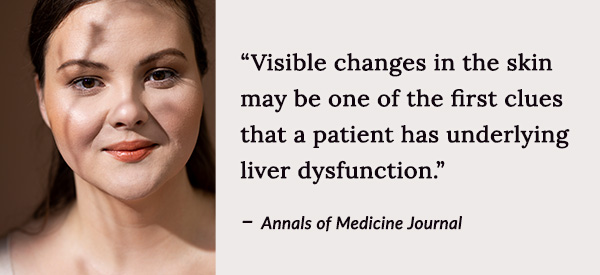
Your skin is not just a surface barrier. It’s also one of your largest elimination organs. When the liver struggles to clear waste efficiently, it looks for alternate routes to manage the toxic load. When more and more metabolic waste is redirected toward the skin, congestion builds beneath the surface. This can eventually show up as visible changes on the face and body.
Skin signs that often point back to liver overload
Many women notice skin changes long before lab tests ever flag a problem. Common clues include:
- Persistent breakouts or adult acne
- Redness, blotchiness or chronic inflammation
- Dull tone or uneven texture
- Increased sensitivity to products you once tolerated
- Dark under-eye circles
- Itchy or irritated skin, especially after certain foods
- Fine lines, loss of elasticity or accelerated aging
These outward skin changes aren’t random — and they’re not just cosmetic. They reflect what’s happening internally when the liver’s detox, hormone and antioxidant systems become strained.
How liver function disrupts skin health — here’s the biology
Healthy skin depends on effective detoxification pathways, balanced hormones and a steady supply of antioxidants. When liver function is compromised, all three are affected at once, which explains why skin changes often appear early and progress quickly.
The liver is responsible for deactivating excess estrogen that can drive breakouts and pigmentation. It converts nutrients into usable forms that support collagen production and skin repair. It also produces bile, which allows fat-soluble toxins to leave the body instead of being reabsorbed into circulation.
When the liver becomes overworked or overstressed, these essential processes don’t function as efficiently. Toxins aren’t neutralized as effectively, so they continue circulating through the body. Some are pushed out through the skin via pores, triggering inflammation, congestion and breakouts.
At the same time, oxidative stress increases. This damages collagen, weakens the skin barrier and accelerates visible aging — leading to dullness, fine lines and loss of elasticity.
Simple ways to support liver health (and your skin)
The encouraging news is that when liver function improves, the skin often responds quickly. Many women notice clearer tone, fewer breakouts, calmer inflammation and more resilient skin because the underlying stressors are being addressed — not just covered up.
The best part? You don’t need an extreme cleanse to help your liver do its job. Consistent, gentle support works best.
Eat to reduce detox burden.
Cruciferous vegetables like broccoli, kale and cauliflower support liver enzyme activity. Bitter foods such as arugula, dandelion greens and radicchio stimulate bile flow. Limiting excess sugar and alcohol reduces the liver’s workload immediately.
Targeted nutritional support can make a difference.
Even with a clean diet, modern toxin exposure can overwhelm liver pathways. That’s where targeted support can help.
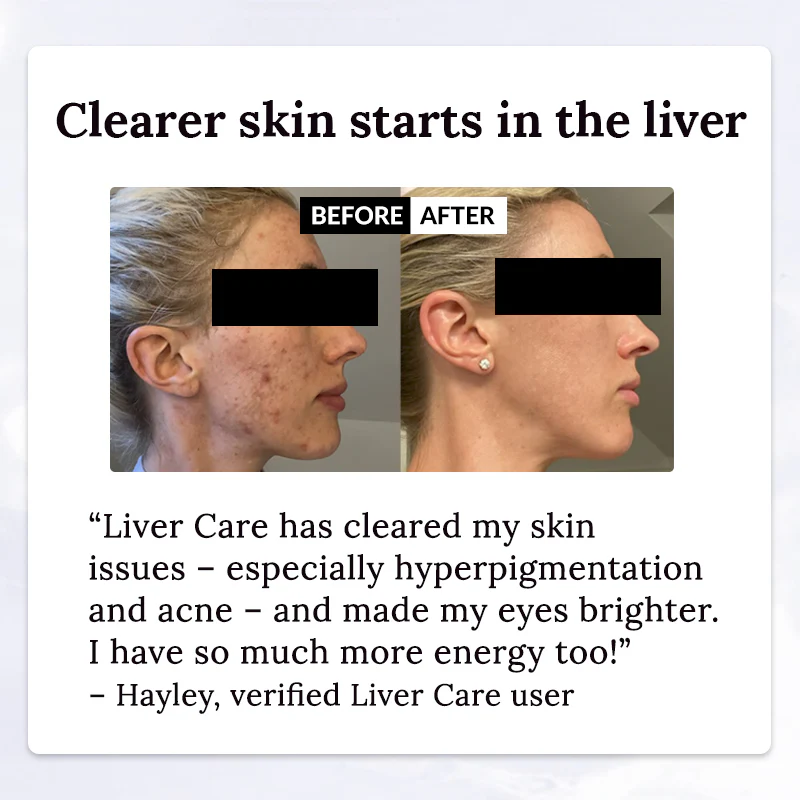
Our Liver Care formula is made with clinically studied botanicals and nutrients that support all phases of liver detoxification, including milk thistle for liver cell protection, artichoke for bile flow and powerful antioxidant compounds that help neutralize oxidative stress. By improving how efficiently the liver processes and eliminates waste, Liver Care helps reduce the internal burden that often shows up in the skin. These are results in your skin that you can actually see.
Hydrate with purpose.
Water supports every phase of detox. Adding lemon, cucumber or herbal bitters can further encourage bile production and elimination.
Prioritize sleep.
The liver performs much of its repair and regeneration during deep sleep. Chronic sleep deprivation directly slows detox capacity.
Support daily bowel movements.
Detox isn’t complete until waste leaves the body. Adequate fiber, magnesium and movement help prevent toxins from being reabsorbed.
Clearer skin starts deeper than the surface
If you’ve tried countless creams, serums and treatments without lasting results, it may be time to look beneath the surface. When the liver is supported, the skin often follows — becoming clearer, smoother and more vibrant as internal balance is restored.
True skin health isn’t about covering up signs of stress. It’s about removing the stressors themselves — and letting your body do what it’s designed to do.