



Food noise, those persistent, intrusive thoughts about food and eating, is real. And it’s no coincidence, in my view, that the term gained popularity around the same time GLP-1 medications arrived on the scene. The world is quick to sell us an outside solution. While there may be room for medical intervention in some cases, I can’t help but ask, “What if food noise isn’t something to silence? What if it’s something to understand?”
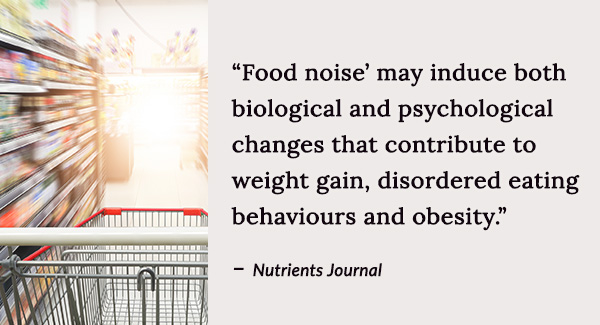
I’ll break down what food noise is in my experience and according to the women I work with, what it might be telling you, and how you can turn down the volume.
What is food noise anyway?
We make hundreds of food-related decisions every day. Some researchers estimate that number to be around 220! What yogurt is best? What’s for dinner? What are the ingredients in this? Add in recipes on Pinterest and TikTok trends, and Instagram reels telling us what foods are ‘good’ and which are ‘bad.’ Decision fatigue is real.
However, “food noise” is different from feeling overwhelmed about what to eat. It’s thinking about your next meal or snack shortly after eating. It’s constantly negotiating with yourself about whether you ‘should‘ or ‘shouldn’t‘ eat something. Maybe you’re feeling preoccupied with specific food cravings, or using food as a reward, comfort, distraction or stress relief.
Food noise leaves us feeling mentally, emotionally and physically exhausted about food.
What your body might really be asking for
Here’s something that gets overlooked. Our bodies are inherently wise.
When we don’t meet our nutrient needs, the brain will increase the drive to seek food. If you’re starting the day with coffee and maybe a little protein and some healthy carbohydrates, you may find yourself hungry all afternoon. If you skip meals, skimp on meals or experience blood sugar swings, these patterns can increase hunger signals and cravings.


Bioactive Berberine
Helps normalize weight, blood sugar, heart, digestive & immune function
So start here: Aim for protein and fiber at every meal in regular intervals throughout the day. Most women need more of both than they realize.
Protein helps regulate appetite and satiety hormones. Fiber supports fullness, stabilizes blood sugar and nourishes a healthy gut microbiome. A more structured and consistent eating pattern can reduce the mental chatter around food, and help prevent the restrict-binge cycle. When the body starts to trust that food is coming in regularly, that food urgency often decreases.


Stress turns up the volume
Food noise isn’t always about food. Often, it’s about stress.
Food noise can be driven by overwhelm, fatigue, emotional depletion, and even loneliness or boredom. When stress becomes chronic, your body may also be signaling a need for deeper support. The adrenal glands require key nutrients to help manage the demands of ongoing stress, and when those reserves become depleted, cravings and appetite changes can become more pronounced.


Instead of asking, “How do I stop this food noise?” try asking yourself, “What do I need right now?” You may need rest. Connection. Comfort. A nourishing meal. Nutrient support to help replenish stress-depleted reserves. A deep breath. Or simply a break from doing it all.
The mental loop that keeps food front and center.
Most of us unknowingly turn up the food noise volume with our thoughts. We think things on repeat like “I shouldn’t have eaten that.” “I’ve already blown it.” or “I’ll start over Monday.” These thoughts create stress, guilt and shame. Then food becomes the quickest way to feel better. Approaching food noise with acceptance and compassion is the first step to quieting it.
Your body holds the answers
So many women have spent years dieting and suppressing the signals our body is sending us. Ignoring hunger, distrusting cravings, following rules from a meal plan, influencer or someone else’s idea of health. Over time, the body’s cues get harder to hear.
The goal isn’t less food. It’s more self-trust.
Food noise usually decreases when women nourish themselves consistently eat enough protein and fiber, support their nervous system, process emotions, manage thoughts, and respond to their body’s cues
But the way I see it, the answer is learning to listen. Your body provides signals, your thoughts reveal patterns, and your emotions provide information. In our Foundations Programs, we teach awareness before action. We learn how to separate thoughts from facts, choose self compassion over self-criticism, and build emotional resilience.
When you develop the skills to interpret your body’s messages and respond with curiosity instead of criticism you begin to create not only a healthier relationship with food, but a healthier relationship with yourself.
And isn’t that what we all really want anyway?
P.S., I’ve got a lot more to share on the topic of food noise! Look for parts 2 and 3 to this blog series, coming soon.